
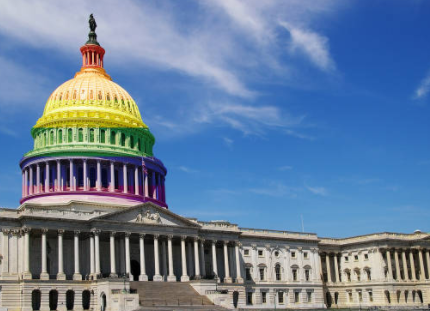
As the United States gears up for the 2024 presidential election, there has been a concerning trend of proposed anti-LGBT legislation from Republican lawmakers. This proposed legislation can significantly impact the lives of LGBT individuals and their families and could set the tone for LGBT rights in the U.S. for years to come.
What is Anti-LGBT Legislation?
Anti-LGBT legislation refers to laws and policies that seek to discriminate against or deny rights to individuals who identify as lesbian, gay, bisexual, or transgender. This type of legislation has a long history in the U.S., with some of the most notable examples being the Defense of Marriage Act (DOMA) and North Carolina’s HB2 law.
Proposed Republican legislation has been particularly concerning for the LGBT community. In recent years, Republican lawmakers have proposed several bills that could significantly impact the lives of LGBT individuals. For example, in 2021, Tennessee lawmakers introduced a bill requiring businesses to post signs informing customers that they allow transgender individuals to use the restroom corresponding to their gender identity. The bill will also allow companies to deny service to transgender individuals if they believe it would violate their religious beliefs.
In addition, some states have proposed or passed legislation banning transgender athletes from competing in school sports that correspond with their gender identity. This type of legislation is particularly concerning as it would prevent transgender students from participating in sports, which can negatively impact their mental and physical health.
How the Democrats are Responding to Anti-LGBT Legislation
While Republican lawmakers have been the most active in proposing anti-LGBT legislation, Democratic lawmakers have also proposed legislation that could impact the LGBT community, but for the better.
For example, updates to The Equality Act, first introduced in 2015, seek to prohibit discrimination based on sexual orientation and gender identity in several areas, including employment, housing, and public accommodations.
This bill has played traditional legislative ping-pong as it stalls in the senate, waiting to get enough votes to pass for President Biden to sign. While the Equality Act has yet to be passed, it has received support from several high-profile Democrats; however, the legislation has also faced opposition from Republicans who argue it would infringe on religious freedoms.
The Battle of the Sides – Anti-LGBT Legalisation vs. Civil Rights
The debate around anti-LGBT legislation has become increasingly polarized in recent years, with both sides arguing that their proposed legislation is in the best interests of the LGBT community.
Proponents of anti-LGBT legislation argue that protecting religious freedoms and preventing what they see as a “radical” agenda from being forced on the American public is necessary. Opponents say that anti-LGBT legislation is discriminatory and perpetuates harmful stereotypes about the LGBT community.
As the 2024 presidential election approaches, the debate around anti-LGBT legislation will likely become even more heated.
LGBT voters and their allies must be aware of the legislation and how it will impact our rights. According to the ACLU, 429 anti-LGBT bills are being considered across many U.S. states.
As Republican lawmakers propose more and more anti-LGBT legislation, the potential for a dramatic impact on the lives of LGBT individuals and their families is deeply concerning. To help create a more inclusive and accepting society, we must all take the initiative to educate ourselves on the issues at stake and speak up to make our voices heard. Open and honest dialogue is the key to a brighter future for all.
